 Bắc Ninh


Bac Ninh shifts governance mindset to sustain investment momentum
BAC NINH – Northern industrial hub Bac Ninh is seeking to overhaul its governance approach as it aims for double-digit economic growth in 2026 and beyond, underscoring that improving the investment climate and competitiveness will be central to sustaining investor confidence.
As competition for foreign capital intensifies across Vietnam, the province has continued to attract billion-dollar foreign direct investment (FDI) projects. Maintaining growth will require a shift from expanding in scale to upgrading the quality of governance.
Strong FDI inflows, rising pressure to retain capital
 |
|
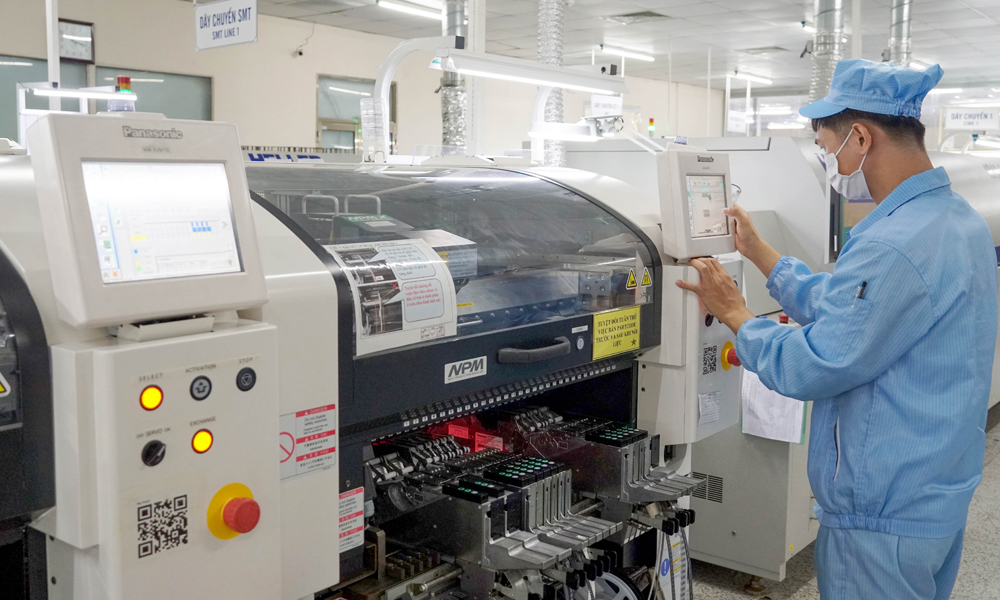
A production line at Hanel Production, Processing and Import-Export Joint Stock Company (Hanel PT) in Tien Son Industrial Park. |
Entering 2026, Bac Ninh has consolidated its position as one of Vietnam’s five largest local economies, with an economic output nearing 440 trillion VND (16.9 billion USD).
Early-year data paint an optimistic growth picture but also highlight the urgency of reforming administrative thinking to match the province’s expanded scale and ambitions.
At a business conference held in early February by provincial authorities, Bac Ninh announced five industrial park infrastructure projects covering more than 800 hectares, along with 25 secondary investment projects. The province attracted more than 1 billion USD in newly registered and adjusted capital within a short period.
By the end of 2025, Bac Ninh’s cumulative FDI had reached a record 46.8 billion USD, helping it retain its leading position nationwide in newly registered investment capital.
Officials said investor confidence stems not only from available industrial land and infrastructure but also from expectations surrounding a “new Bac Ninh” following administrative restructuring, which is intended to optimize and concentrate resources.
However, as the economy expands, so too does the burden of governance. With its economy now among the top five nationwide, Bac Ninh can no longer rely on fragmented management or outdated administrative practices, officials say.
Neighboring provinces such as Hai Phong, Quang Ninh and Thai Nguyen are stepping up competition with flexible incentives and improved services. In that context, Bac Ninh’s competitive edge can no longer rest solely on “hard” infrastructure advantages. The challenge is shifting from “attracting at all costs” to retaining and nurturing strategic capital flows.
Nguyen The Minh, an investment officer at Que Vo Industrial Park, said even minor administrative delays can disrupt multinational supply chains.
This reality requires provincial departments, including newly merged agencies overseeing agriculture and environment, finance and construction, to operate with greater speed and inter-agency coordination to resolve bottlenecks related to investment procedures, land and environmental approvals.
In the second half of 2025, Bac Ninh introduced a “60% green lane” mechanism for projects in industrial parks, clusters, inland container depots, logistics centers, social housing and urban areas, aimed at expediting procedures and boosting investor confidence.
Institutional quality seen as key to next growth phase
 |
|
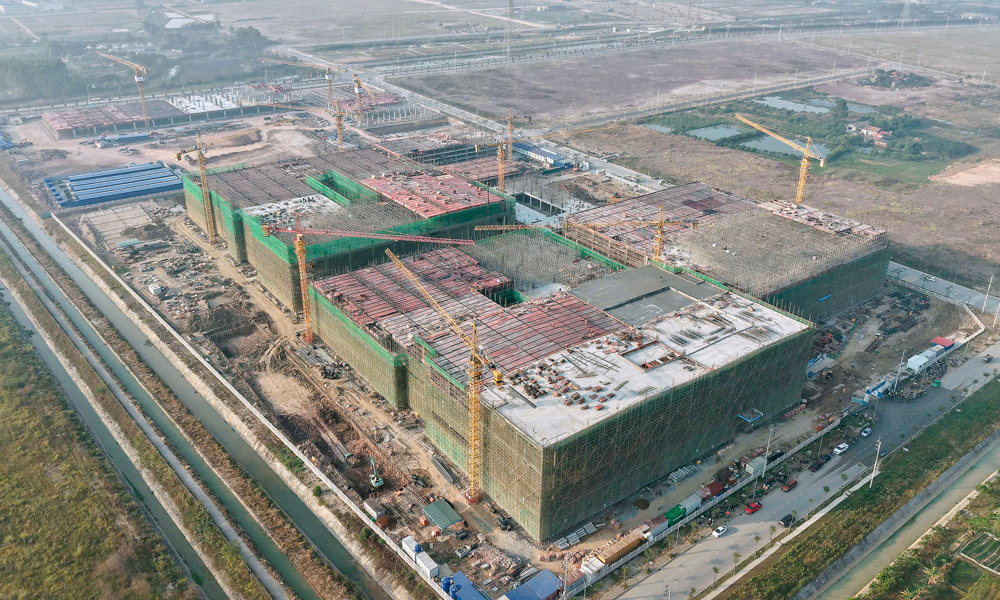
Thanks to favorable investment procedures, Liwiwon Co., Ltd. at Yen Lu Industrial Park is accelerating construction to bring its project into operation soon. |
In its 2026 socio-economic development plan, Bac Ninh targets gross regional domestic product (GRDP) growth of 12.5–13% at constant prices. To achieve that, the province has pledged to further improve the business environment, promote innovation and mobilize all available resources for development.
Authorities are reviewing and cutting administrative procedures, shifting from pre-licensing checks to post-audit supervision, and reducing compliance costs for businesses and residents.
Business leaders say they are looking for tangible improvements rather than policy statements. Yan Hui, General Director of Liwiwon Co., Ltd. at Yen Lu Industrial Park, welcomed the province’s shift toward post-audit management and expanded online public services. However, he emphasized the need for timely and transparent responses to investor concerns.
Following administrative mergers, Bac Ninh faces the additional challenge of harmonizing procedures and standards across a larger jurisdiction. Even minor inconsistencies can raise compliance costs and hinder business expansion. As a result, authorities see standardizing and digitizing processes on online platforms as an urgent task.
The province has set ambitious targets for 2030, including per capita GRDP of around 8,500 USD and total import-export turnover exceeding 200 billion USD, alongside its aspiration to become a centrally governed city.
Economists say that as “hard” infrastructure such as transport, power, water and industrial parks approaches capacity limits, future growth will increasingly depend on “soft” factors, including institutional quality, governance capacity and human resources.
Bac Ninh’s next phase of growth, they say, cannot rely solely on expanding industrial land or attracting labor-intensive projects. Instead, the province must build an administrative ecosystem that minimizes compliance costs while maximizing effective support for businesses.
With a solid economic base and strong fiscal capacity already in place, Bac Ninh now faces the task of transforming the pressures of scale into momentum for deeper reform - reinforcing its role as one of Vietnam’s leading growth engines.











Ý kiến bạn đọc (0)